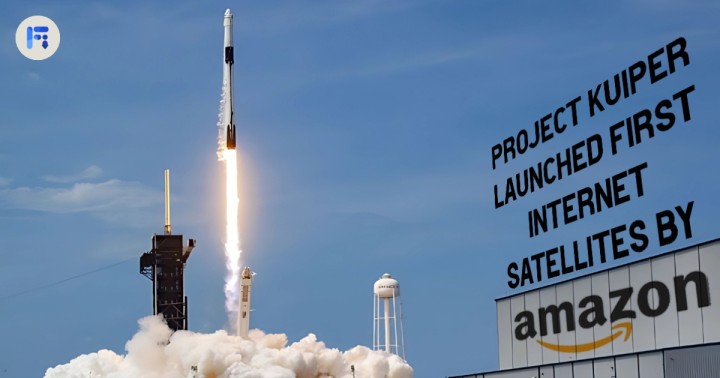
Amazon's Project Kuiper Launches First Internet Satellites
On April 28, 2025, Amazon successfully launched the first 27 satellites of its ambitious Project Kuiper. It marks a significant step in its mission to provide global broadband internet and directly compete with SpaceX's Starlink. The satellites were deployed into low Earth orbit (LEO) via a United Launch Alliance (ULA) Atlas V rocket from Cape Canaveral, Florida.
Project Kuiper: Aiming for Global Connectivity
Project Kuiper is Amazon's $10 billion initiative to build a constellation of over 3,200 LEO satellites, aiming to deliver high-speed internet to underserved and remote regions worldwide. This launch follows the deployment of two prototype satellites in 2023 and represents the beginning of Amazon's full-scale satellite deployment.
The newly launched satellites incorporate design enhancements, including mirror coatings to reduce light reflection, addressing concerns from the astronomical community about satellite brightness.
Deployment Timeline and Regulatory Milestones
Under the Federal Communications Commission (FCC) guidelines, Amazon is required to deploy at least half of its planned satellite constellation by mid-2026. While analysts suggest that Amazon may seek an extension. The company has secured over 80 rocket launches through partnerships with ULA, Arianespace, Blue Origin, and SpaceX to meet its deployment targets.
Amazon plans to commence customer service later in 2025, offering consumer terminals priced under $400. These terminals are designed to provide reliable broadband connectivity, especially in areas lacking traditional internet infrastructure.
Competing in the Satellite Internet Arena
Amazon enters a competitive satellite internet market dominated by SpaceX's Starlink, which has deployed over 8,000 satellites and serves more than 5 million users globally.
Despite the late entry, Amazon's integration of Project Kuiper with its existing cloud services and e-commerce platforms positions it as a formidable contender.
Jeff Bezos, Amazon's founder, expressed confidence in the project's potential, stating,
"There's room for multiple successful players in the market."
Future Outlook
With the successful launch of its first batch of satellites, Amazon's Project Kuiper is trying to accelerate its deployment efforts, aiming to enhance global internet accessibility.
As the company continues to build its satellite network, it will play a crucial role in bridging the digital divide and providing connectivity to underserved communities worldwide.
What do you think—can Amazon’s Project Kuiper supersede Starlink, or is it too late to catch up? Share your thoughts in the comments!